Requirements
Age, ID, your own bank account, an income you can show and room in your budget.

Commission, gig work and seasonal jobs make some months better than others. A loan has to work in the worst of them. Here is how to check that.
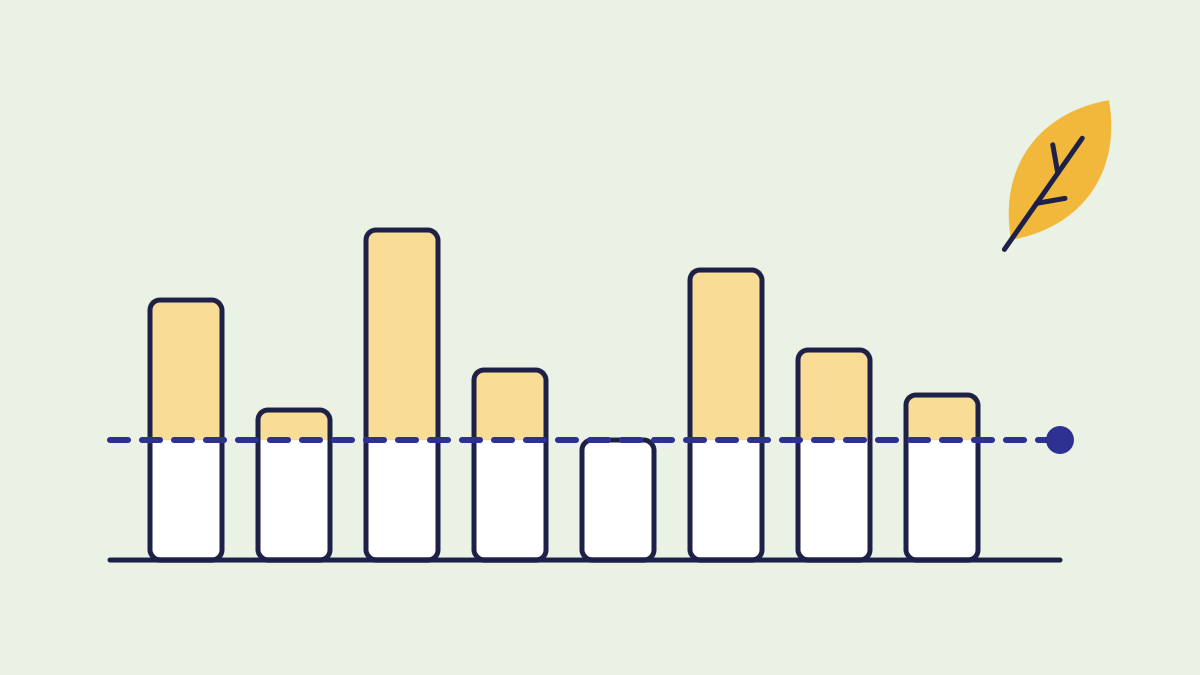
If your income changes from month to month, plan any loan repayment around your lowest month, not your average. Lenders will look at your bank statements over several months to see what you really receive. RandLeaf loans are repaid monthly on a date you choose, so pick a date after the money you can most rely on usually arrives.
Commission earners, freelancers, drivers and delivery riders, seasonal and contract workers, people paid weekly or fortnightly, and anyone whose pay varies with hours or tips. A changing income is not a reason to be declined on its own. It does mean the lender, and you, need a realistic picture.
A lender must check that a loan is affordable for you. There is no single document the law prescribes for this: the regulation that set out specific documents as proof of income was set aside by a court, as the National Consumer Tribunal discusses in NCR v Sewatumong. In practice, a lender usually asks for bank statements covering several months and may ask for invoices or a letter from the business that pays you.
What the lender sees is the pattern: how much lands in your account, how regularly, and what goes out. A strong month followed by two weak ones will be read cautiously, and that protects you as much as the lender.
Take your last six months of income as it reached your bank account. For example, say it was R9 200, R12 800, R7 900, R11 400, R8 600, R10 100.
Now list your essential costs for a month: housing, food, transport, school costs, airtime and existing debt repayments. If they already take up most of your floor, a new repayment will be hard in a weak month, however good the average looks. The free budget planner helps you add it up on one page.
Using RandLeaf’s published pricing (version RL-PRICE-2026-10), a R3 000 instalment loan over 3 months is R1 123.59 a month. A R2 000 short-term loan is repaid as one amount of R2 170.00. Ask yourself whether that repayment still fits in your lowest month after essentials, with something left over. If it only fits in a good month, choose a smaller amount, a longer term, or no loan.
If your best pay-in moves around within the month, choose the latest date it usually arrives by, not the earliest. A debit order that runs a day after the money lands is far safer than one that runs a day before it.
Whatever date you choose appears in the DebiCheck request you confirm with your bank, and the debit order runs on that date each month. How DebiCheck works.
Most months contain four paydays if you are paid weekly, but some contain five. Plan your budget on four. The fifth payday in a few months of the year is extra, not something your repayment should depend on. If you are paid every two weeks, plan on two pay-ins a month and treat the occasional third as a bonus for your buffer.
Because a RandLeaf repayment is taken once a month, it helps to move a quarter of it aside from each weekly pay-in into a separate pocket. When the debit order runs, the money is already waiting and a slow week near the end of the month can’t knock it over.
When you apply, describe your income honestly: who pays you, how often and how much it varies. Bank statements tell the same story, and an application that matches them is easier to assess. Overstating your income doesn’t help you. It only makes it more likely that the loan you are offered is bigger than your weak months can carry.
When a month comes in above your floor, move the difference, or part of it, into a separate pocket or savings account before you spend it. Over a few months that buffer covers a weak month, so a repayment never depends on a good one. It is also the best way to need a loan less often.
Bank statements for the last three to six months for the account your income is paid into, any invoices or payment letters that explain irregular deposits, your ID and a list of monthly expenses. The application tells you exactly what it needs. RandLeaf requirements and documents.
In short
Plan on your lowest month, not your average. Make sure any repayment fits that month after essentials, pick a repayment date after your most reliable pay-in, and put the good months’ extra aside as a buffer.
Age, ID, your own bank account, an income you can show and room in your budget.
A printable sheet to check what fits each month.
Your ID, proof of income and banking details, and how to share them safely.